Fahrenheit (Indigo Prophecy) - Review (PlayStation 2, Xbox and PC game)

Fahrenheit' was released in 2005 by Quantic Dream and was really a sort of early experimental game that would set the stage for their later games of 'Heavy Rain' and 'Beyond: Two Souls

Never Alone - Review (PC, Xbox One and PlayStation 4 game)

‘Never Alone’ is one of those games that test the traditional boundaries of what a video game should be as it really is a vehicle for telling a larger story, one of the Iñupiat people and it goes about this in such a heart-warming way that it’s difficult not to enjoy it.

Last Inua - Review (iOS and PC)

‘Last Inua’ is set in a frozen tundra and is an icy tale of a father and son’s journey to vanquish evil from the world in the form of a demon named Tonrar. The son, Hiko, is blessed with supernatural powers strong enough to defeat Tonrar but his frail, adolescent body is unable to handle these powers and as such he is too weak to embark on this quest alone.

Machinarium - Review (PC and Mobile game)

'Machinarium' is a point and click puzzle game where you take control of a small, unassuming robot in a robotic society that’s victim to a gang of antisocial thugs.

Harvest moon, A Wonderful Life, SE: Befriending villagers and receiving gifts

Friendship points can be acquired in the traditional, ‘gift-giving’ method but also by giving villagers discounts at your store. This means that if you give them three discounts a day (the maximum number) and one gift a day then you’ve acquired four friendship points.

Sunday, July 27, 2014

Harvest Moon: It's a Wonderful Life, SE - Crops, Trees and Fertilizer Guide

The basic mechanics of growing crops is that you buy the seeds, till soil using the hoe, plant the seeds then use a full watering can with them to water them. How often you water them depends on the season. 

harvest moon wonderful life watering crops


Crops, trees and general planting:

You’ll be given everything you need to start growing crops but only with two tomato seeds that can be found in your tool shed on the shelf. To get more you need to buy the seeds from Vesta’s farm, just over the river. You should check the chart below to see which crops grow in which seasons, if you plant something in the wrong season they’ll just end up dying after a couple of days. 

 Once you’ve bought what you want to plant you’ll want to go back to your farm and use your hoe with the untilled soil to prepare the land for the seeds to be put in. After you’ve planted your seeds you should fill your watering can up at the small fountain next to the chicken coop and then water them all. You’ll notice the colour of the soil changes to darker when it has been watered. This soil will slowly get lighter and lighter as the water wears off. Like your animals, crops are best watered twice a day, morning and evening to stop them from dying. That’s not to say you should be watering your animals, just that both tend to require care twice a day. There is nothing worse than waking up to find all your crops have wilted and this is a particular problem in summer.


Crop:Type of crop:Seasons:Cost to buy:Appearance:
TomatoesVineSpring - Fall30g
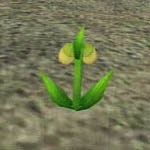
harvest moon wonderful life tomato crop
StrawberriesVineFall - Spring30G
harvest moon wonderful life strawberry crop
MelonsVineSummer - Fall50G
harvest moon wonderful life melon crop
WatermelonsVineSpring - Summer60G
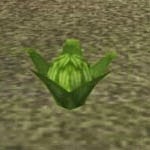
harvest moon wonderful life watermelon crop
TurnipsRootSummer - Winter20G
harvest moon wonderful life turnip crop
YamsRootFall40G
harvest moon wonderful life sweet potato yam crop
PotatoesRootWinter - Spring40G
harvest moon wonderful life potato crop
CarrotsRootFall - Winter30G
harvest moon wonderful life carrot crop


Tree:
Season to harvest:
Cost to buy:Appearance
BananaSummer280G
harvest moon wonderful life banana tree
PeachSummer180Gg
harvest moon wonderful life peach tree
OrangeSummer140G
harvest moon wonderful life orange tree
AppleFall140G
harvest moon wonderful life apple tree
GrapeFall160G
harvest moon wonderful life grape tree

At first, there are only a few different varieties but this will soon change. By the second chapter you will be able to create hybrid crops and trees which is when you merge together two different things into a totally new one. This can happen in generations whereas generation two would look like: tomato + potato = X and generation three would be like, X + Y = Z where it’s two generation two crops. Still with me? Fabulous. Let’s start with the basics though so I don’t confuse myself. You’ll notice that there are two different kinds of thing you can plant; trees and crops. Trees take a lot longer to grow, around a year, and only bear fruit in one season. Crops meanwhile take between 5 to 10 days to grow with some quicker than others, turnips for instance, only take between 4 to 5 days from being planted to being harvested. 

The easiest way to hoe, plant and water crops is in a particular pattern which means you have minimal moving to do. This is optional, but a lot of people do it. See diagram below:

--------
-x-x-x-
--x-x--
-x-x-x-
--x-x--
--------
X = Crop
- = Unused ground

By planting crops in this sort of chess board like pattern it means you can stand in the middle and swivel. That’s the best way I can describe it. By putting them alongside each other then you kind of have to be very precise and slow with your walking and it’s hard to get the middle crops. But, like I say, this is just a little thing a lot of people do, it’s not in the ‘you must do it this way or else everything will be DEAD when you wake up’ list. Trees are in that list. Trees must be planted with enough room around them otherwise they get all crowded and will die, just like in real life, things which don’t get enough sunlight are going to be stunted due to all the bigger plants around them and eventually die. So, planting trees is another pattern, one which goes like this:

---------
-x-x-x-x-
---------
-x-x-x-x-
---------
-x-x-x-x
---------
X = Tree
- = Unused ground

At the beginning we have only five kinds of tree available to us but you can plant as many as you like as you see fit. I tend to leave space empty for when I get around to hybridizing but you don’t have to; by that point you’ll be close to getting something called ‘the grand field’ which is a very large area of ground to plant as much as you like in it. I tend to buy one of each tree though not all at once as they are rather expensive when you have only 3000G.

Crops and trees take a bit of effort but they will serve you well and, as well as being the foundation for your future hybrids, will feature in your cooking. Besides, we’re playing the game now so we may as well do everything it has to offer. Below you can see the costs of each grade of produce and seed for both trees and crops should you choose to sell your produce/seeds. I will be discussing how to raise something from B grade to S grade in the Fertilizer section below.


B grade cropB grade seedA grade cropA grade seedS grade cropS grade seed
Tomatoes35G15G45G25G55G35G
Strawberries35G15G45G25G55G35G
Melons70G25G80G35G90G45G
Watermelons75G30G85G40G95G50G
Turnips25G10G35G20G45G30G
Yams60G20G70G30G80G40G
Potatoes60G20G70G30G80G40G
Carrots45G15G55G25G65G35G


B grade fruitB grade seedA grade fruitA grade seedS grade fruitS grade seed
Banana25G750G35G760G45G770G
Peach40G560G50G570G60G580G
Orange30G410G40G420G50G430G
Apple25G410G35G420G45G430G
Grape35G450G45G460G55G470G


Fertilizer
 

In the very first chart of this guide which includes the season of crops you’ll see I also put what it costs to buy the seeds from Vesta’s farm. When you buy them they will always be at ‘B grade’ which you’ll be familiar with from all our talk of different grade dairy products above. Since these are the lowest grade available you’re probably wondering how you improve the crop or seed and, I imagine, you’ve already guessed fertilizer. Well you’re right, but it’s going to take a lot more than just one application of the stuff.
 

You can put fertilizer on your crops, trees and pasture. Putting fertilizer on the pasture is extremely important and you should put a little on there on the first day of Spring as it also gives your cow something to eat. Animals preferring eating the grass outside and it seems to increase the quality of your cow’s milk a lot faster than feeding them fodder indoors. When you put fertilizer on your trees and crops you’ll notice that three large triangles appear. This just indicates that that crop is fertilized; the triangles will shrink over several hours until they are completely disappeared. When they have disappeared you can put more fertilizer on to add towards improving the crop to A or S grade.

Note: If you try and put more than 1 fertilizer on something straight away before the triangles have disappeared a talking roach will call to you and tell you not to do that. He’ll then burrow back into the ground. No, really.


Fertilizer costs 40G each, which is a major improvement on what it cost in the GameCube version, but you’ll need to put roughly 2 applications of fertilizer on every crop, every day for the duration of its growth period. This sounds like a lot, and it is, but this is guaranteed to get the crop up to S grade and completely bypasses A grade. All in all, you’ll be losing a lot of money if you fertilize a crop up to S grade then sell that S grade crop, even to Van, but that’s not what we’ll be doing.

Seed maker, extended explanation:

Earlier when I was talking about upgrades and stuff I mentioned a seed maker. This is where that thing comes in handy. First of all, I'll just tell you this; you can obtain the seed maker for free if you befriend Daryl in chapter 1 AND don't talk to Takakura until you have the thing. By talking to Takakura prior to getting it for free from Daryl you'll have to pay 15,000G for it and will be locked out from getting it as a gift. After befriending Daryl you must enter his lab when he is in there, sometime after noon.


harvest moon wonderful life daryl seed maker

WIth that out the way, I'll explain how it works. You’ll notice that under each crop you put into the machine there’s three dots with the first one lit up as orange. This is the current processing stage. It takes 3 days for the crop to be turned into a seed and each day another light will come on. You can put any fruit or vegetable into the seed maker to turn it into seeds but once you put something inside it you cannot take it back out again.
 

The most efficient way to use the seed maker is to fertilize crops up to S grade, harvest them, then put those S grade vegetables into the seed maker. When it’s gone through the processing process you’ll receive 2 S grade seeds for every S grade fruit or vegetable you put in there. This means you spend less money on fertilizer as, just by harvesting 2 S grade crops, you’ll essentially get 4 seeds out of it, which will be turned into 8, 16, and so on without any need for additional fertilizer. Of course, this will take time as they take a little while to grow and can’t be planted in every season without the help of a particular flower (in Chapter 2 onwards). To speed things up, I fertilize 3 of each different type of crop up to S rank and then, with the 6 new seeds, I’ll just plant them as normal whenever the season is right. Remember to not sell all your seeds or S rank crops though as you need enough to keep the process going.

Fertilizer maker: Another extension you can buy from the ledger is fertilizer maker for 15,000G. This would have been a useful addition to the farm if fertilizer was as expensive in this game as it was in the GameCube version, but it’s not, it’s only 40G each. A fertilizer maker attaches onto that bin in your barn and sits just outside, near the pasture. To use it you put flowers in the bin in your barn and then collect the fertilizer by going outside and using the sort of ‘collection bin’. It produces it straight away, it doesn’t need to decay, but the process of putting flowers in one by one and then taking fertilizer out one by one can be very time consuming. Ignoring the fact you also need a large supply of flowers to even begin this, which takes even more time. A benefit of having this fertilizer maker is if Vesta’s is shut, like on a Van day, then you won’t have to wait until the next day to get some fertilizer. It also means you don’t have to travel as far and, yes technically it is cheaper. A flower is worth around 10G if you use the cheap ones and fertilizer is 40G but it’s down to you to decide if the time spent using the thing is worth the small price reduction. Just a guess, but if you’ve got the money to splash out on one of these you’re probably not counting your pennies.
 

Fertilizing trees however is on an entirely different playing field as they are seriously fertilizer hungry plants. To bump a tree up from B grade to A grade takes, approximately, 30 fertilizer. You don’t need me to tell you that that’s a lot of money, especially if you want all your trees at S grade. Whether it’s worth it or not is up to you. You’ll have noticed that the cost of seeds is worth a significant amount more than the fruit themselves and due to this I’d recommend turning your tree fruit into seeds to sell on, rather than depend on the fruit themselves. If you want to keep fruit for recipes or gifts, go ahead, it's not all about the money.

Saturday, July 26, 2014

Harvest Moon: It's a Wonderful Life, SE - Wild Plants and Flowers Guide

Wild plants and flowers are easily overlooked in Harvest Moon, A Wonderful Life but they do have some very important purposes. I’m not saying that flowers and herbs are going to change your game entirely but they are there for a reason, at the very least, if you’re not eating wild plants but instead drinking your milk or eating the fish you catch then you’re wasting a lot of money. Milk is a huge source of income and eating raw fish can make your character a bit sick; you know he’s sick because he’ll pull a pained face as he tries to choke down the bones and fish guts you just fed him. So, until you’ve established yourself a functioning kitchen where you can afford to cook meals for fun, you’ll be eating the various edible plants that the Valley has to offer.

Edible plants: 


SeasonGrows everyPriceHow many grow:Appearance:
MugwortSpring1 day15G6
Mugwort screenshot harvest moon wonderful life
Royal FernSummer1 day15G8
Royal Fern screenshot harvest moon wonderful life
HackberryFall1 day20G7 (5 on 1st and 2nd of month)
hackberry screenshot harvest moon wonderful life
BrackenFall2 days15G6
Bracken screenshot harvest moon wonderful life
MatsutakeFall2 days25G3
Matsutake screenshot harvest moon wonderful life
ToadstallFall3 days100G2
Toadstall screenshot harvest moon wonderful life
SorrelWinter3 days20G7
Sorrel screenshot harvest moon wonderful life

Locations:

Mugwort:
  • Beside your house, behind the field
  • Beside the locked shed on your farm
  • Next to Cody’s studio
  • Next to Kassey and Patrick’s house
  • Inside Romana’s courtyard, left side as you enter
  • Next to Vesta’s farm beside the road leading to Mineral Town
  • On the leftside of the path going up to the Dig Site
Royal Fern:
  • Next to the locked shed on your farm
  • At the back of your farm where the weeds cover another field
  • Next to Cody’s studio
  • Next to Kassey and Patrick’s house
  • Inside Romana’s courtyard, left side as you enter
  • Next to Vesta’s farm beside the road leading to Mineral Town
  • On the leftside of the path going up to the Dig Site
  • Beside the Harvest Sprite’s house, where the spring is
Bracken:
  • Near the locked shed on your farm
  • At the back of your farm where the weeds cover another field
  • To the left of the Harvest Sprite’s house
  • Next to Kassey and Patrick’s house
  • In the back right corner of Romana’s courtyard
  • Next to Vesta’s farm beside the road leading to Mineral Town
Hackberry:
  • At the back of your farm where the weeds cover another field
  • To the far right of the previous hackberry
  • Between the chicken coop and field
  • On the right side of the Harvest Sprite’s house, where the spring is
  • Next to the locked shed in Romana’s courtyard, near the back
  • There are two hackberries by Cody’s studi
Toadstall:
  • Both are behind Vesta’s farm
Matsutake:
  • Two of them grow by the Harvest Sprite’s house
  • Beside Kassey and Patrick’s house
Sorrel:
  • At the back of your farm where the weeds cover another field
  • Next to the locked shed on your farm
  • Next to Cody’s studio
  • Next to Kassey and Patrick’s house
  • Inside Romana’s courtyard, on the right side
  • Next to Vesta’s farm beside the road leading to Mineral Town
  • On the right side of the path leading up to the Dig Site
Wild plants as gifts:

Ok so not many people are thrilled to receive what is essentially a piece of rocket cross bred with a four leafed clover but there is however, one person who will be. Galen. Galen will give you the fishing pole in Chapter 2 if you’re good buddies with him and he’ll take around 7 or 8 gifts until he considers you a friend. Give Galen a Mugwort every day until he can’t keep his eyes off of you and that fishing pole may as well be yours.

Wild plants in recipes:

If you’ve read my guide on recipes and cooking, found here, then you may have noticed that quite a lot of meals incorporate mushrooms and herbs as ingredients. If you intend to cook later on in the game you may want to keep a small stock of wild plants in your fridge or inventory otherwise you may find yourself having to wait a couple of seasons in order to get what you need.

Several people like particular recipes, Galen, for example, likes marinade because that’s what Nina makes him. Flora and Gustafa both really like mushroom curry and Rock likes mushroom gratin. If you want to befriend any of those people with something a bit more special than a flower then you should save up your mushrooms. Or hey, maybe you just want to be nice, it’s your game not mine. 

Flowers:

Flowers are very useful for hybridization as they provide different enhancements when merged with crop seeds. Three flowers have these abilities: the upseed flower, the happy lamp and the gemsoil flower. 
  • Upseed flowers improve your crop seed grade by turning them automatically into S grade without the need for any fertilizer.  
  • Happy lamps can make any crop seed work in any season so you can grow your tomatoes, yams or dhibes all year round.  
  • Gemsoils allow your crops to grow in any soil regardless of how fertile it is. This is useful for later generation crops which can usually only be grown in the great field which you must buy separately.
Other flowers in the game are useful as gifts and, at the beginning of the game, a useful means of making money. Look at the chart below, you’ll see that when you start the game there are 36 flowers growing every 2 days. 36 flowers is a lot to pick in one day so you can break it up by doing some one day, some then next and so on. 18 goddess drops is 270G, that’s 1350G in Spring just from half the available flowers. Since these flowers grow together in large patches it’s surprisingly quick to pick them all. You can also save money by giving people toyflowers instead of goddess drops as gifts.


Season:Grows every:Price:How many grow:Appearance:
Goddess dropSpring2 days15G18
Goddess drop screenshot harvest moon wonderful life
ToyflowerSpring2 days10G18
Toyflower screenshot harvest moon wonderful life
Happy lampSummer4 days15G10
Happy lamp screenshot harvest moon wonderful life
Mist moonSummer2 days10G20
Mist moon screenshot harvest moon wonderful life
Trick blueFall2 days10G18 (11 on 1st)
Trick blue screenshot harvest moon wonderful life
GemsoilFall4 days20G10
Gemsoil screenshot harvest moon wonderful life
AmorousWinter2 days10G19
Amorous screenshot harvest moon wonderful life
UpseedWinter2 days25G2
Upseed screenshot harvest moon wonderful life

Flowers as gifts:

A lot of people in general like flowers and they are a cheap and easy way to win favours and friends. If you have any left over flowers you’re wanting to get rid of, here’s a list of people who will gladly take them off your hands. Make sure to note though that Celia, Nami, Muffy and Lumina will interpret your gifts as a romantic gesture.

Vesta: All flowers
Ruby: All flower
Romana: All flowers
Chris: All flowers
Cody: All flowers
Kassey: All flowers
Patrick: All flowers
Lumina: All flowers
Muffy: All flowers
Celia: All flowers
Gustafa: All flowers
Rock: Toyflowers, Mist Moon
Nami: Trick blue
Griffin: Mist moon, trick blue
Mukumuku: All flowers (up to 5 daily)
Kate (arrives in Chapter 2): All flowers
Samantha(arrives in Chapter 2): All flowers

Friday, July 25, 2014

Kill the Bad Guy - Full Review (PC game)

This monochrome game looks and feels as though it has more ambition than it can handle and, whilst it has some decent moments, tends to come across as pointless and repetitive. Unfortunately, a sleek look and some tongue-in-cheek humour is just simply not enough to elevate this game to the status it desires as an intelligent and imaginative slaughter fest. 

Developer: Exkee
Genre: Puzzle, murder simulation
Release date:
May 28, 2014  
Platforms: PC, Mac and Linux
ESRB: T - Teen


‘Kill The Bad Guy’ is an indie puzzle game that revolves around assassinating targets using objects in the environment whilst remaining undiscovered and is generally depicted in a simple, understated artistic design with plenty of dark humour. Though the game suffers from some key issues you’ll still manage to squeeze a few hours of good old fashioned puzzling fun out of it even if it is an incredibly slow starting game. This is a puzzle game that puts you at the heart of revenge murdering individual targets who are more often than not based on real life offenders.

Gameplay

The objective of the game is rather self-explanatory; for each level you must kill a bad guy in various, unusual ways. The game comprises of 60 of these bone shattering, blood splattering levels and for every level there will be some way in which you can manipulate objects within the environment to bring about the doom of your target. At the start of every level you read a fairly amusing profile about your intended victim which tends to include details of their crime and a name that vaguely points towards somebody in real life like ‘KimDotKom’ in reference to Kim Dotcom or ‘Oscar’ in reference to Oscar Pistorius. After reading your target’s profile you’re then dropped into a white environment with black objects such as cars, ropes hanging on walls, steam vents and pianos that you can pick up, rotate and combine. You’re given very little guidance on what to do from here, except on the first few levels, so instead you have to work out what it is you can do that will result in your target’s death. By selecting dark coloured objects you’re shown a large array of arrows that point to where you can place objects, be that on the top of buildings or just simply anywhere on the ground. Objects that can be combined are coloured green after you pick up one of the constituent parts so, in this sense, it’s not particularly challenging to work out what goes with what. 

Kill the bad guy game kickstarter screenshot

During gameplay there are very few controls other than picking up, rotating and combining but after you have managed to pull off your mission you can watch, cinematic style, as your target is killed over and over again in a replay mode. During replay you can switch the angle of the camera to get the best shot but, though not a particularly offensive element of the game, it does come across as a rather pointless. During actual gameplay you can, rather helpfully, pause the game and look around the area but you cannot manipulate anything whilst the game is paused meaning that, when you decide what you’re going to do, you need to do it quickly. This is fairly useful as in the later levels there are usually so many elements to contend with you need to give it a few moments before you figure out what it is you’re going to do. It’s not a simple matter of strapping a spear to a glorified slingshot and flinging it halfway across the map into the poor sod’s chest though, oh no, you have CCTV and the police to be concerned about. The real challenge of the game comes with doing everything undetected as these obstacles, and later on bodyguards, all have lines of sight. If you’re caught doing any of your dastardly assassinating then its mission failed and you need to try again but with less probability of your assignment being plastered all over YouTube.


Kill the bad guy game kickstarter screenshot

As you progress through the levels you’re not just exposed to new challenges like the police and cameras, there is also a pretty significant increase in the variation of objects you’re given and thus the ways in which you can assassinate your targets. It must be said however that the first ten levels of this game are by far the worst of them all. Truthfully, I was amazed that I even progressed beyond them and discovered that the game did actually contain something challenging and interesting. Although these first few levels are intended to be tutorial levels that ease you into the mechanics of the game what you instead experience is something painfully dull and excessively lengthy. Never has a ‘tutorial’ chapter dragged on so slowly and so uneventfully and, worse still, it doesn’t even feel like a tutorial as there are very few instructions on what to do or how to do it. Instead you must trawl through what feels like a rite of passage before being allowed into the real game as you suffer through level after level of repetitive music that sounds as though it’s been put together by two thirteen year olds, deaths that all look the same bar one electrocution and one screaming guy on fire and an incredibly limited set of tools to experiment with. Now, whilst I’m of course glad that’s not all there is to this game I doubt many people enjoy the feeling of suffering for somebody else’s art.

Thankfully the game opens up after a couple of hours play and you’re exposed to more than one way to kill your target with these methods becoming gradually more complicated. The animations of your dying target do become a tad more varied in that they fall over when they are electrocuted but overall there’s not much difference between driving a spear through your target’s head, dropping a car on him and crushing him with a wrecking ball as, either way, he ends up as a bloody smear on the pavement. In a game where the method in which you kill your target is designed to be the be all and end all of the gameplay I would have expected more death animations such as a crushed, flattened body or some pierced limbs. 


Kill the bad guy game kickstarter screenshot

The game has some degree of re-playability as within each level of the game there are ‘secondary objectives’ which include the same basic tasks; catch the tooth of your fallen victim, kill them on the first day and find a hidden passport. The only interesting additional objective is to kill your target in a specific manner as the rest are repetitive and restrictive. The passport tends to be in locations like beneath cars or objects and hidden within buildings that become transparent as you pan over them. By completing these unimaginative challenges you gain stars which count towards unlocking a bonus level at the end of each chapter. These bonus levels are, ironically, quite a bit more interesting than the main game as they tend to have more varied objectives like killing 30 zombies before they hobble over to the other side of the screen. Despite the fact that the bonus levels are pretty fun it’s still a shame about the ways in which you must unlock them as repeatedly clicking on a tooth that bounces away from your target after he dies is extremely dull. Searching for a passport in the environment is also very boring as, due to the unfurnished nature of the area, it’s very easy to spot them. Even though they are sometimes hid under an object this really adds in little to no depth and, frankly, I don’t know why they wouldn’t offer up different objectives. 


Kill the bad guy game screenshot

As a final note I found that the game’s humour often borders on the tasteless as there are sometimes very graphic descriptions of real life crimes such as those perpetrated the Columbine killers that some, if not many, may find uncomfortable. Generally the profiles of your targets are humorous covers of less invasive crimes such as fraud and embezzlement but when the game describes in graphic detail the crimes of the monstrous Albert Fish then the vibe of what is supposed to be a carefree, slaughter orientated romp is very quickly killed and is instead turned into something much darker and not at all light-hearted. Questionably dark humour aside the profiles still do offer good, immersive introductions to the start of every level and are relatively engaging. Besides, since all the targets look the same it’s good to offer up some way of distinguishing between them.

Appearance and sound


The game is decked out in a very simplistic design of pure white backdrops and solid black interactive objects. This professional feeling environment comes across as clean and crisp and, overall, it’s all very pleasant. The simply designed streets and parks never feel too plain however as, once your assassination attempts start, the landscapes are quickly cut through with bright red blood, fiery orange explosions and piercing blue water. Your targets also stand out vividly in comparison to their surroundings as they each support a yellow jacket and massive red bull’s eye target on their faces so there’s no chance that you’ll mistake a regular pedestrian for them. Unfortunately all of the targets look identical to one another and any kind of variation, even if it was just the colour of the jacket, would have done the trick but, regardless, I enjoyed how apparent they were in their surroundings.


I’ve already mentioned that I didn’t like the music and, whilst initially I enjoyed it, it quickly grates on you as essentially it’s just a sort of rap lyric of ‘kill the bad guy k-k-kill the bad guy’ over and over again to a beat. Thankfully the music only plays at the start and end of every level and not during gameplay as it would quickly become unbearable. Aside from the music the game has very good sound effects with plenty of appropriate noises for almost every action you can perform. There are

Overall

Whilst the game starts off slow and simplistic it quickly develops into a more robust murder simulation with some fairly imaginative solutions to the dilemma of how to discreetly kill your target. I particularly enjoyed the rather difficult task of luring your target to a particular spot or changing the path they were following by quickly putting obstacles in their way without them noticing. The level of difficulty scales as you play but even when the game becomes more complex there are moments where it comes across as pointless and repetitive. The secondary objectives are uninspiring but add in a reason to replay the previous levels and the bonus levels are a nice change of pace if you’re tired with the base game. Currently the game feels incredibly overpriced at $15 as it feels very much like a free, online game that’s been bulked out with additional levels and a couple of added in features. I would recommend waiting until the price has dropped but if you enjoy flippant murder simulation games with stark graphics and environmental manipulation then perhaps you’ll enjoy this more than I did.


The Good:
  • A good concept
  • Cool bonus levels
  • Achievements are always fun 
  • Nice looking map area
  • Quite challening in later levels 
  • Sometimes pretty amusing
  • Nice use of CCTV and other obstacles to put more pressure on player
The Bad:
  • Boring and uneventful
  • Very under-developed
  • Overpriced, feels like a free game
  • Repetative and unexciting
  • Lack of varation in death animations
  • Pointless challenges
The Score: 4/10 

Last thoughts: "Thank god I don't have to play any more of that dreary rubbish..."


Saturday, July 19, 2014

Viva Piñata - Full Review (Xbox 360 and PC game)

'Viva Piñata' presents a tantalizingly unusual premise that you’ll either love or hate; attract a variety of Piñata creatures into your lovingly crafted garden on Piñata Island then tame, personalize and manage them all. These Piñatas come in all shapes and sizes but are all based off of real creatures though with quirky names that reflect a type of candy and a strange array of colours that may be changed, if you can figure out how. There’s no denying it, this is a very casual game for the causal gamer but despite its childish appearance it’s a charming and addictive game with great creative opportunities for those who enjoying gardening, designing and pet keeping.

Developer: Rare (Xbox 360) Climax Group (PC)
Genre: Life simulation
Release date: November 9th 2006
Platforms: Xbox 360 and PC
ESRB: E - Everyone.


Story and gameplay

There’s not a great deal of storyline though there is some attempt to explain what’s going on; you start by walking through a beautiful haven filled with flourishing flowers, trees and crops with piñatas flying overhead, prancing through the grass or drinking from streams and pools. In the centre of all this fluff however is a tiny plot of hard, cracked earth with a woman sobbing in the middle of it all. After comforting her you’re charged with using this plot of land as your own and to turning it from something that resembles the aftermath of an explosion to something more in tune with the surrounding area. You’re given a watering can that’s practically falling to pieces with rust and a shovel that looks like it’ll snap as soon as it touches the earth, armed with these two devices you’re instructed to get to work. The game is vastly open-ended with very few objectives once the tutorial is finished with and though it may appear to be a simple gardening free for all there’s a hidden structure in the way that you progress. As you begin your gardening career you’ll gradually unlock new titles, better equipment, more garden space and different seeds that allow you to garden in more complex ways.


Viva pinata screenshot garden horse bear pumpkins

Whilst initially you’ll attract low level piñatas that simply require you to have a certain amount of grass, dirt or perhaps a particular flower or vegetable you’ll soon catch glimpses of wild, black and white creatures as they prowl the outside border of your garden. Attracting the attention of huge eagles, magnificent lions or clumsy elephants will take time, dedication and maybe even a few sacrifices as, after all, the animal kingdom is not known for its kindness towards smaller, weaker creatures. You start out in a very restricted manner; confined to a tiny plot of dilapidated land that’s in need of some serious maintenance but once you’re removed all the junk, beaten out the cracks and grown a bit of grass you’ll be faced with an empty canvass for you to play with. You’re never thrown too far into the deep end yet you’re given just enough freedom to discover a gardening style by yourself. Do you start with patches of flowers and draw in butterflies and bumblebees or do you opt for a vegetable patch to try and allure some rabbits or mice? Either way they’re all low levelled but the way in which you advance and nurture your garden will have an impact on the creatures you’ll lure inside your newly developing patch. Piñatas will only enter your garden once you’ve met their individual ‘visitor’ requirements and, once inside they’ll develop an additional set of requirements in order for them to actually become a resident. Once you’ve finally convinced them that they should inhabit your garden they’ll move in, change into their true colours and settle down to enjoy themselves. Here, they’ll live, sleep, mate and attract other piñatas to become residents too or, if you choose, entertain people at parties should they be that lucky piñata that gets chosen. It’s, admittedly, a very strange concept but still a very entertaining one once you’ve become enthralled in the everyday drama that comes with managing a horde of cute, but ultimately wild, animals.


Viva pinata 1 screenshot hedgehogs and bear

Although a huge part of the game consists of attracting and taming Piñatas the game is so much more than that and, if you feel like exercising your creative side, there’s huge opportunity to get inventive with your garden’s design. There’s a surprising amount of content packed into this charming game whether that’s levelling up to unlock new features or dressing up your Piñatas to increase their worth before sending them off to children’s parties. If you enjoy gardening then you’ll be delighted at the whole host of trees, crops and flowers you can nurture and at the vast difference a few drops of fertilizer can make. The variety in trees, flowers and crops is actually quite impressive and there are some lovely elements like the magnificent oak tree that, when fully grown, has a trunk that appears to be carved with the forms of many different species of Piñatas. Whilst the huge range of, not only flora and fauna but buildings to, may seem impossible to fit all into one garden due to a build limit of sorts you can have multiple gardens with the same profile. In this case, chocolate coins and your gardening level all pass over so you will still have access to everything that has been unlocked yet now with a completely empty plot of land. It makes sense to have multiple gardens as many piñatas are specialized creatures who will only live in certain environments that would be extremely difficult to integrate into an already beautified and designed garden. Large piñatas such as hippos require gardens that are mostly consisting of water, for example, so attempting to make 80% of your garden consist of lakes and rivers whilst speckled with bulrushes and water lilies will, quite naturally, naturally destroy any attempt you had at a designing a perfectly crafted flower bed and orchard.


Viva pinata screenshot tree river and ships

You are not the only non-piñata resident on the island however and throughout the game you’ll be guided and helped by the local residents who offer services in shops and, if you pay for it, services in your garden such as weeding, gathering and as either watchmen or night watchmen. Whilst the first couple are pretty self-explanatory the presence of watchmen in the game is unusual as gardening and virtual pet simulation combinations tend to be of the peaceful variety, not this one. Amidst the everyday scraps and brawls that occur between piñatas that don’t get along you also have to contend with outsider aggressors such as sour piñatas, ruffians and the evil Dastardos who’s the ringleader of all of these. Sour piñatas can be made resident and turned into good variants of their sour selves but ruffians and Dastardos are evil for life. Whilst ruffians simply make a nuisance of themselves by dropping poisonous sweets for your unsuspecting piñatas to eat and throwing up land over rivers and pools you may make, Dastardos is actively violent. When your piñatas get sick, by losing a fight or eating something poisonous, Dastardos will show up and break them open with a stick, effectively killing them. Well, not exactly kill them as this is a nice place so rather than die permanently broken piñatas merely respawn as the black and white variety outside of your garden.


Viva pinata dog bird and house near trees and pond

Whilst the standard way of keeping these antagonists away from your garden is by taming sour piñatas and using their special abilities to keep Dastardos distracted you can also buy special upgrades. The game’s in-game currency are, quite appropriately, chocolate coins which can be made by selling piñatas, building a mine and selling what you find within it or making and selling produce for profit. Chocolate coins can be put towards a huge variety of things such as garden items, fertilizer, piñata houses, special buildings, hirelings, fashion accessories for your piñatas, seeds, produce or special services like the doctor or the hunter who can capture piñatas for your garden. In order to keep track on everything that’s going on it’s useful to utilize the in-game journal which is there to not only provide backstory about the island and its residents but also to track your accomplishments and statistics such as whether you’ve achieved maximum growth for individual plants or how many piñatas you have in your garden. The journal brings to light several unofficial objectives as it lists each plant and each piñata with several checkboxes beside them all which are checked as you accomplish things such as finding each of the 3 variants for each piñata or romancing a species a certain number of times. A piñata variant occurs when you instruct your pinata to eat something and, after enough experimentation, you’ll find three different items that will change their colour into something else. Whilst this is of course simply aesthetic it’s a pleasant option to be able to discover more hidden elements within the game.

Part of what makes this game so enjoyable is not just the attention to detail and the open-ended, casual gameplay but also the charming personality of your piñatas themselves. It’s quite easy to form opinions on certain piñatas and pick out favourites as the way in which they interact with each other and the environment differs depending on the species. Syrupents, a snake type piñata, for example often start fights and can be quite stubborn to get rid of yet, if you perform special actions with them, can become entirely different creatures that are extremely useful. Many piñatas also enjoy wearing special accessories and, whilst some have the potential to enhance the piñata in some way or form, mostly it’s just to boost their happiness meter or to allow them to ‘romance’ one another. Swananas, for instance, enjoy wearing diamond collars and strutting about, honking snobbishly whilst Cinnamonkey’s are disturbingly human as they sidle about on two legs and who require a fez hat to allow them to breed. As an interesting addition you can also buy domesticated piñatas from one of the several shops as well as put down fencing to enclose them should they be something like chickens or sheep. Amongst all of this is the actual ability to send your piñatas to parties as, now and then, a crate will be given to you with the request for a certain type of piñata or just one of high worth. By packing your piñata off to a party you receive some ‘joy candy’ that makes piñatas happy in return but, what with everything else going on, this apparent ‘objective’ in the game is lost.

Graphics and audio

The artistic style of ‘Viva Piñata’ is both unique and extremely distinctive with its bold, colourful and patterned style. Whilst it may not be to everybody’s taste due to them appearing somewhat childlike it cannot be denied that, visually, ‘Viva Piñata’ is technically impressive and extremely advanced for the time it was brought out. There’s a very fine level of detail in the game that can only really be appreciate when you zoom right in as only then can you witness the growth of plants or admire the little augmentations strewn across buildings and clothing. Every blade of grass can be identified, the clouds roll by as the time ticks by in a well enforced day and night cycle and even your custom designed labels can be seen clearly on the bodies of your piñatas. Not one stone has been left unpolished and everything from the texture of the grass to the beautiful, vibrant scenery has been crafted to maintain that distinctive ‘Viva Piñata’ atmosphere. 


he music of the game is generally very soothing and not at all irritating though, for very long periods of play, it may start to grate a little. All of the Piñatas have their own individual sounds that tend to a little exaggerated such as a ‘peeping’ noise from worms or a strange, haughty honking noise from those uppity swans I mentioned earlier. The personality of the piñatas are all very well addressed in the sounds that they make but truly it’s the overall ambient noises from the gentle swishing of the wind, the hammering of the rain or the combined snuffling of your piñatas. Now and then there are some very abrasive noises such as when a sour piñata enters your garden or drops a poisoned candy but these simply serve as loud, audible warnings that something has happened and so in this sense are not particularly annoying.

Overall

Despite initial reservations ‘Viva Piñata’ is an undeniably good game with a great deal of personality and charm that’s simply hard to resist. With a very solid 30 hours or so playtime the game puts you in a position where you start caring passionately about taming all available piñatas and about making the perfect, piñata paradise. It’s an extremely casual game with some basic multiplayer support where up to four people control the same on-screen cursor and, whilst this is likely to not interest older games, is beneficial for parents and their children. Its very friendly demeanour makes it a great game for beginners with plenty of help at the beginning of the game whereas for those looking for more of a challenge I tell you this; just try and get a hold of a Dragon piñata, then tell me it’s not challenging.

The Good:

  • Looks fantastic, very detailed, very vibrant
  • Relaxing, casual gameplay 
  • Deceptively challenging at later stages 
  • Addictive and ‘collection’ orientated mentality of meeting all objectives 
  • Fun for all ages 
  • Unique and distinctive gameplay 
  • Lovely audio and music 
  • Multiple gardens a nice addition for allowing themed gardens 
  • Piñatas are very charming, huge variety
The Bad:
  • Co-op play limited to sharing the same cursor
  • A lot less to do as you level up 
  • Some autonomy happens as you employ staff making you feel a little redundant 
  • Lacks any real storyline and objectives which could have given the game more structure
The Score: 8/10

Final thoughts: "This is quite possibly the best 'gardening' game I have ever played, despite there being an updated version of this game (trouble in paradise) I still find this one to be the most accessible."

Tuesday, July 15, 2014

Blek - Quick Review (iOS and Android game)

Never have I quite played an iOS game that is as elegant and unique as 'Blek' is and, amongst all of the faceless, duplicate puzzle games that swarm Google Play and the App store, this intuitive brainteaser stands out vividly.

Developer: Denis Mikan 

Release date: December 3rd 2013 (iOS), June 30th 2014 (Android) 
Genre: Puzzle 
Platforms: iOS and Android

The game is excessively simplistic and takes full advantage of touchscreen technology where the aim is to draw lines that hit all of the circles on the screen. It sounds a lot easier than it is as each time you draw a line it will repeat on itself, over and over again until either all of the circles are collected, it bangs into dangerous black spots or wanders off the edge of the screen. The way in which the line comes to life is quite an intriguing thing as the way in which you draw it dictates the way it will move once you’ve finished drawing it. Draw arches as though tracking the path of a bouncing ball and the line will follow this track as though actually bouncing itself. 


The difficulty level of the game goes through several phases as, at first, it’s quite an unusual concept to adjust to but after just a few levels you’ll think yourself an expert at it. It’s not until you get about midday through the game, there’s 60 levels overall, where you’ll start really struggling with some very tricky and often frustrating puzzles. Not only is the gameplay and premise very enjoyable but the game itself oozes personality in its sleek, stylish graphics and dreamlike music. It’s for the best that the music is so calming as, when you’re forced to think outside the box in an abstract manner, there will be times where you’ll be too frustrated to continue playing for much longer. The game is best in short bursts and is very easy to dip in and out of as the levels often take very little time and, overall, the entire 60 levels won’t take you much longer than a couple of hours to complete. Due to the various ways a level can be solved however there is some degree of re-playability and, besides, 'Blek' is such a likeable, attractive game that it’s nice to return to even after completing it.


Currently there is some concern with the way the game has been ported onto Android phones as there’s no clear way of how to exit the game and, upon pressing the back button, you’ll be taken back a level and not to the home screen. A lot of users have also reported crashing which is such a shame as the game is truly elegant and quite beautiful.

The Good:

  • Imaginative game that encourages thinking outside the box
  • Addictive and time consuming 
  • Challenging but rewarding 
  • Lovely music, beautiful graphical style, very elegant 
  • Innovative gameplay stands out from the crowd
The Bad:
  • Some control issues with buttons and menus
  • Very short lived and will not take long to complete 
  • Difficulty curve becomes quite steep mid-game
  • No S-Pen support for Android users
The Score: 8/10

Final Thoughts: "Finally, an iOS puzzle game that actually makes you think about you next move."

Monday, July 14, 2014

Orbitum - Quick Review (iOS game)

Never has the very real threat of falling into a black hole felt so calming. Orbitum is a strangely hypnotic game where every second counts in your struggle to stay alive by hopping from one orbital line to another. 

Developer: Happymagenta Ltd.
Genre: Action arcade
Release date: 2nd July 2014
Platforms: iOS (Ipad and Iphone)
ESRB: E - Everyone. 


Essentially you’re playing as a very bright, white planet that is being steadily dragged into a black hole by its extremely strong gravitational pull and, though you can hop away from this fatal void and take refuge on orbits that are farther away, these quickly decay beneath you. Despite the inevitable decay of the line you’ve, in the very least, bought yourself some time to consider the nature of your existence and perhaps the overall meaning of all of this. Though it’s tempting to just flee from the danger entirely you’ll find yourself trapped in by an, equally deadly, red barrier. This barrier that switches between being an unearthly mist or a solid red line prevents you from venturing too far out and leaves you stuck between a rock and a hard place. Between this fatal barrier and the deadly black hole suctioning you in there’s not much you can do except move between lines with lightning fast reflexes. The increasingly strong gravitational forces and the ever-present blockade of doom aside there’s even more threats to contend with; red, triangular obstacles are continually thrown in your general direction to keep you from lolling about too long on any particular line. 


Ok so perhaps lolling about isn’t the right term as the game generally feels like you’re running on a treadmill with some sadist at the front of it, turning up the dial to make you run faster and faster. All the while, there’s a life threatening pit behind you that, some kind of lava filled, shark infested, spike laden ditch that you’re not too keen on falling into. So you keep running, helplessly and hopelessly because there’s nowhere to go except not in the death-pit whilst your sadist buddy laughs and throws knives at you. Why you’d choose to partake in this masochistic game of ‘stay alive and stay fit at the same time’ is questionable but, there’s no doubt about it, Orbitum is somehow very good stress-relief. On a much needed positive note you’re also thrown helpful items like a shield or extra points that revolve around on the orbital lines, tempting you into making a premature jump so you can grab them. Green hexagons are the items that give you additional points to boost your high score whilst blue cubes will reward you with some kind of helpful item, such as the shield or a hyper-jump powerup. 

Underpinning all of this is an electronic female voice updating you with what you’ve just picked up, the new level you’re on and things of that sort. A weird, hypnotic electronic music track plays continually in the background and generally I found it both distracting and helpful though it did grate a little after just a few minutes of play. Despite the grating, the rhythmic beat from the music actually gave me something to time my jumps against and, in this sense, it acted as some kind of celestial, auditory anchor in a sea of… death. The learning curve of the game is spot on as whilst you only start with one or two of those red triangles and plenty of helpful items the pressure quickly increases as you become more familiar with the game. By the time you’re a couple of minutes into he game you’re battling against multiple triangles and working within a much larger space when the game switches its background colour to pale rather than dark. Overall the game is fairly addictive and very challenging, with its low price tag and clean cut, simplistic graphics its worth playing if you enjoy reflex based arcade games.

The Good:
  • The challenging nature of later levels keeps you playing
  • Hypnotic and mesmerising game draws your attention 
  • The game design is clean cut and rather tasteful 
  • Shifts in the colour scheme and associated gameplay changes adds depth 
  • Simple to understand and easy to get into
The Bad:
  • Music can be grating and distracting
  • Not particularly original and brings nothing new to the table 
  • Not the most addictive or fun of survival games
The Score: 5/10

Final thoughts: “That was weird, I have a headache, I don’t think lava filled shark spike pits are a thing, but they should be.”